The scientific program will include presentations from the winner of Jim and Paul award, presentation from the invited speakers, oral and poster presentations as well as several pre-conference workshops. All information including schedule, book of abstracts, etc. will be available here before the conference. Meanwhile meet the invited speakers and workshop teachers and organizers.
Invited speakers
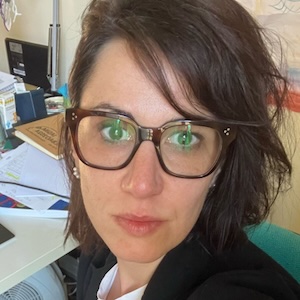
Prof. Giorgia Sciutto
University of Bologna
Are spectral imaging and chemometrics the next frontier of Cultural Heritage diagnostics?
Giorgia Sciutto is an Associate Professor of Chemistry of the Environment and Cultural Heritage at Chemical Department of the University of Bologna, Italy. Her research focuses on analytical methods for characterising complex samples, such as paintings and environmental matrices, by integrating vibrational spectroscopy, spectral imaging, and advanced chemometric data processing. She is also director of the Master’s Programme in Science for the Conservation-Restoration of Cultural Heritage of the University of Bologna and she leads funded research projects in spectral imaging for the investigation of cultural heritage and environmental systems.
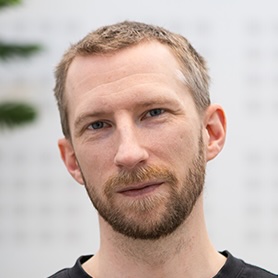
Assoc. Prof. William Lidberg
Swedish University of Agricultural Sciences
Unveiling New Horizons in Forest Floor Remote Sensing
William is a geospatial scientist specialising in high-resolution LiDAR analytics and large vision models to detect cultural remains and map fine-scale landscape features. His research leverages nationwide LiDAR coverage and advanced machine learning to identify subtle archaeological structures, such as hunting pits, ancient boundaries, and legacy ditches, that are often overlooked in traditional inventories. By integrating large vision models with geomorphometric analysis, he develops scalable methods for automated feature detection that support cultural-heritage protection, forest planning, and sustainable land management.
His applied work has resulted in operational tools widely used across Sweden, including the Hunting Pit Map, LiDAR-based ditch and culvert detection, and other automated mapping products developed in close collaboration with the Swedish Forest Agency and national authorities. These tools help safeguard cultural remains during forestry operations and improve planning across multiple sectors.
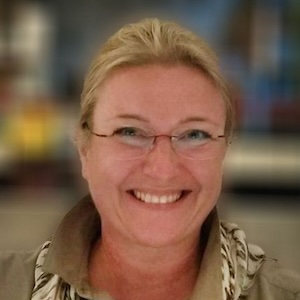
Prof. Martina Marchetti-Deschmann
TU Wien
Presentation title about hyperspectral biospectroscopy to be announced later
Martina Marchetti-Deschmann has been Professor of Mass Spectrometric Methods/Analytical Chemistry at the Institute of Chemical Technologies and Analytics since 2020, where she heads the Mass Spectrometric Bio- and Polymer Analytics research group. Her doctorate in chemistry at the University of Vienna in 2003 was followed by years as an assistant at the Vienna University of Technology and research stays at the University of Münster (D), AMOLF (NL), Leiden Medical Center (NL), the Czech Academy of Sciences (CZ), and Vanderbilt University (US). As early as 2003, she established omics technologies at TU Wien for both industry and basic medical-biological research. Since her habilitation in 2013, she has dedicated herself to imaging mass spectrometry, which allows the spatial distribution of molecules on surfaces and in tissue to be visualized and is known worldwide for her correlative, multimodal imaging approaches, in which she combines various methods with mass spectrometry.
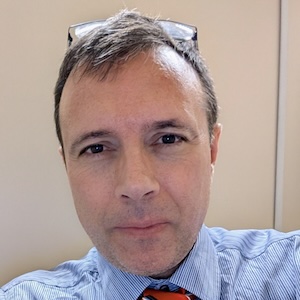
Dr. Juan Antonio Fernandez Pierna
Walloon Agricultural Research Center
NIR Hyperspectral Imaging for Advancing Food Safety and Quality Assessment
Juan Antonio Fernandez Pierna got his Degree in physical chemistry at the University of Zaragoza, Spain in 1997. Afterwards, in 2003, he obtained his PhD in Pharmaceutical Sciences (Chemometrics) at the Analytical Chemistry department of the Vrije Universiteit Brussel (Professor D. L. Massart) with a thesis entitled "Improvements in the multivariate calibration processes". Since 2003 he works as research assistant at the CRA-W in Belgium where he has been working for the development ans application of chemometric tools as well as the validation of methods. From end 2009, he is also responsible for the DRIM laboratory dedicated to Data processing, Raman spectroscopy, hyperspectral Imaging and Mid-infrared. He is author or co-author of 11 book chapters and more than 100 scientific papers mainly related to chemometrics, spectroscopic data, food and feed authentication and imaging techniques. He has given more than 70 conferences and courses at international meetings. He has also supervised or is currently supervising several MSc and PhD at national and international levels. Since 2018 he is also associated profesor at the University of Liège (Belgium).
Workshops
Saturday, 13/06, 9:00-12:00
Preprocessing and analysis of hyperspectral images in HYPER-Tools
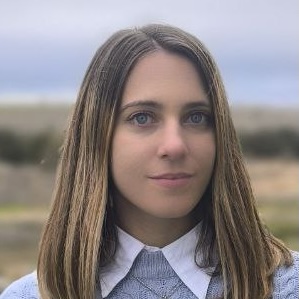
Giulia Gorla
University of the Basque Country
Giulia Gorla, born in 1995, received her Bachelor’s degree in Chemistry and Industrial Chemistry in 2018 from the Università degli Studi dell’Insubria, where she also completed her Master’s degree in Chemistry in 2019. She earned her PhD in Chemical and Environmental Sciences in 2023, graduating with a dissertation titled "Infrared Spectroscopy and Chemometrics: Facing Analytical Chemistry Issues Through Data." Since January 2024, she has been working as a postdoctoral researcher in the Analytical Chemistry Department at UPV/EHU, contributing to the HyperSort – Hyperspectral Optical Engine project. Her scientific interests include spectroscopic instrumentation, data analysis, hyperspectral imaging, and the development and application of chemometric methods, spanning Machine Learning and Deep Learning techniques. Giulia has authored 22 scientific publications and has experience in data fusion, Process Analytical Technology (PAT), and anomaly detection, with particular attention to uncertainty and errors in both spectra and models, topics she considers essential for building reliable analytical workflows.
Saturday, 13/06, 13:00-16:00
Image unmixing (Multivariate Curve Resolution). Linking space and chemistry of hyperspectral image components
Characterizing the distribution and chemical identity of image components is an essential task to understand the behavior and nature of our scanned systems. This workshop aims to define what image unmixing is and how to use this methodology in practice.
Conceptual aspects of image unmixing, such as the modus operandi of this methodology and the potential of data fusion in this context, either finding the connections of related images recorded with the same platform or merging information coming from multimodal image analysis, will be described.
A relevant part of this workshop will be dedicated to hands-on work with routines usable under MATLAB environment or as stand-alone software. Examples on the analysis of a single image or sets of images will be carried out. Other than the straight characterization of image components, additional aspects such as how to extract quantitative information at a pixel or image level will also be tackled. The workshop is structured in such a way that novices in the field and experienced users can benefit from the contents presented.

Anna de Juan Capdevila
University of Barcelona
Anna de Juan is a professor at the Department of Analytical Chemistry at the University of Barcelona since 2003, where she leads the Chemometrics group. Her expertise is in the development of chemometric methods, in particular Multivariate Curve Resolution methodologies, for data fusion and analysis of complex analytical measurements, such as hyperspectral images and monitoring and control of bioanalytical and industrial processes. In the context of hyperspectral images, she has developed unmixing algorithms to adapt to multimodal measurements, time series and big data. She has published numerous works in scientific journals and has been provided a large number of invited lectures in chemometrics, imaging and process analysis conferences. Since 2023, she is Associate Editor-in-chief of Journal of Chemometrics. She is also member of the Editorial Advisory Board of Chemometrics and Intelligent Laboratory systems and Analytica Chimica Acta and acted as section editor in the reference work Comprehensive Chemometrics. She received the 4th Chemometrics Elsevier Award in 2004 and the TIC2023 award for Comprehensive Collaboration in Chemometrics in 2023. She has served as invited professor in research stages and graduate schools in Dalhousie Univ. (Canada), Univ. Lille (France), Univ. Copenhagen (Denmark), Università degli Study di Modena e Reggio Emilia (Italy) among others. She is currently president of the Spanish Society of Chemometrics and Qualimetrics and delegate of the Division of Analytical Chemistry (DAC) of EuChemS. She has organized and fostered conferences in the areas of Chemometrics, Process Analytics and Analytical Chemistry.
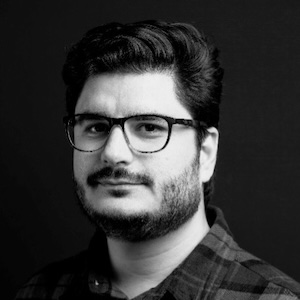
Rodrigo Rocha de Oliveira
University of Barcelona
Rodrigo Rocha de Oliveira earned his PhD (Cum Laude) from the Universitat de Barcelona, specializing in chemometric strategies for data fusion, modeling, and chemical process control. His postdoctoral work at the University of Genova (Italy) advanced near-infrared chemical imaging analysis of biological processes.
His research focuses on developing chemometric tools for Process Analytical Technology (PAT), with emphasis on spectroscopic sensors and chemical imaging. Currently, he is exploring Generative Artificial Intelligence (GenAI) applications in chemometrics.
Dr. Oliveira was awarded the 2021 Siemens Process Analytics Prize for outstanding contributions by a young scientist.
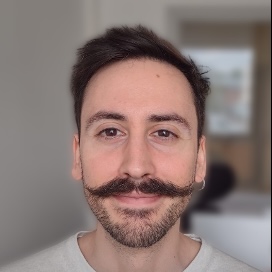
Adrián Gómez Sánchez
University of Barcelona
Adrián Gómez Sánchez is a researcher working in the areas of chemometrics, hyperspectral imaging, and data fusion for analytical chemistry. He obtained a double PhD through an international cotutelle between the Universitat de Barcelona and the Université de Lille, where his doctoral research focused on the development and application of new strategies for hyperspectral image fusion.
His research interests include the development of multivariate curve resolution and unmixing methodologies to address missing data, multimodal measurements, and complex analytical imaging scenarios. He previously worked as a postdoctoral researcher in the DyNaChem team at CNRS–LASIRE (Université de Lille), where he combined advanced chemometric modelling with cutting-edge fluorescence microscopy systems.
In parallel, he is developing Lovelace’s Square, a non-profit digital platform that provides free access to chemometric algorithms, educational materials, and computational resources, with the aim of supporting open science, education, and collaboration within the chemometrics community.
Sunday, 14/06, 9:00-12:00
From data to deployment: turning hyperspectral ideas into working applications
This hands-on workshop guides you through the full lifecycle of hyperspectral application development for research and testing - from exploratory analysis to automated implementation. Using Qtechnology's hardware and software stack, you’ll learn how to streamline experimentation, accelerate iteration, and move beyond one-off analyses toward reproducible, automated workflows.
Through guided tutorials with Hypervision Explorer and the Hypervision SDK, you’ll analyze data, train models, and build a simple automated application with hyperspectral images captured on the Hypervision 1700 camera in combination with the Hyperscan system.
Whether you work with hyperspectral imaging for research, method development, or testing, this workshop will equip you with practical tools and a structured development process you can directly apply to improve your own spectral imaging workflows.
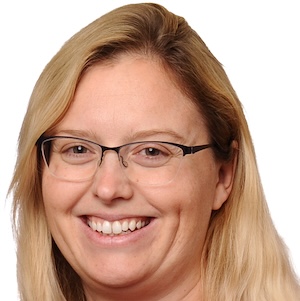
Marianna Smidth Buschle
Qtechnology A/S
Marianna Smidth Buschle is the Lead of the Software Department at Qtechnology A/S, where she has spent 18 years advancing the capabilities of embedded vision systems. She holds a Bachelor’s degree in Mechatronics from the University of Southern Denmark (SDU) and a Master’s degree in Electronic Engineering from the Technical University of Denmark (DTU). Throughout her tenure at Qtechnology, Marianna has specialized in the application side of industrial smart cameras, focusing on the seamless integration of computer vision and image analysis within demanding embedded environments. The software team at Qtechnology develops the Hypervision Explorer and the Hypervision SDK, tools specifically designed to support both exploratory data analysis and the transition to real-time implementation.
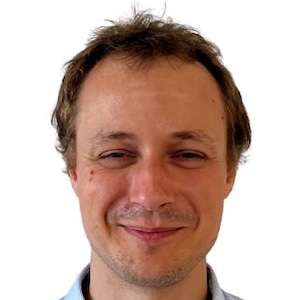
Anton Mølbjerg Eskildsen
Qtechnology A/S
Anton Mølbjerg Eskildsen is a Software Engineer at Qtechnology A/S and the lead architect of the Hypervision software ecosystem. He holds a Bachelor’s degree in Software Development and a Master’s degree in Computer Science from the IT University of Copenhagen (ITU). Anton is the primary developer of the Hypervision SDK and Hypervision Explorer GUI, where he focuses on building a modular, intuitive framework for hyperspectral data management and analysis. His work is dedicated to providing researchers and engineers with a powerful interface to analyze and process spectral data, specifically designed to lower the barrier between complex algorithm development and functional application deployment.
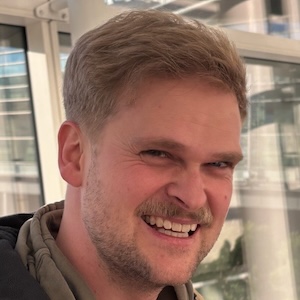
Mathias Møller
Qtechnology A/S
Mathias Møller is a Software Engineer at Qtechnology A/S specializing in hyperspectral imaging and embedded systems. He holds a B.Eng. in Electronic Engineering from the Technical University of Denmark (DTU). Mathias is responsible for the integration of HSI-specific camera functionality and the HyperScan lab scanner system within both the Hypervision SDK and Hypervision Explorer GUI. His work focuses on creating an intuitive and easy-to-use interface for complex spectral sensors and scanning hardware, ensuring that the integration of high-performance equipment remains accessible to the user. He also leads the software development of a dual-head multispectral drone camera system for vegetation analysis, enabling moisture estimation through synchronized multi-band imaging.